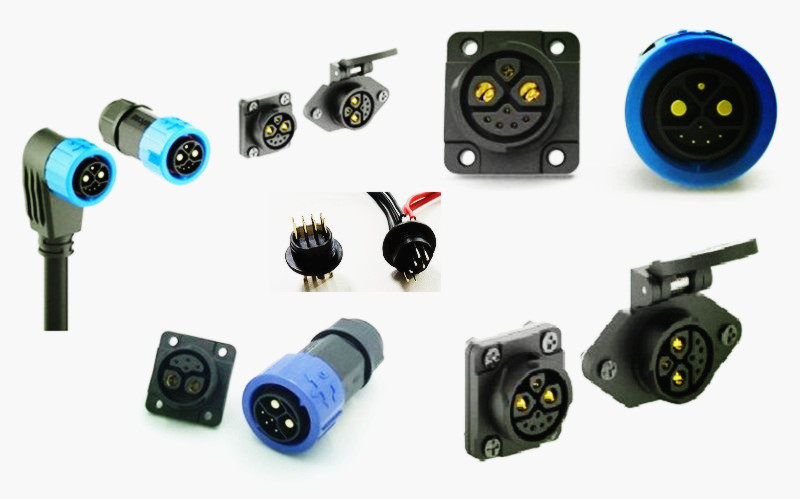
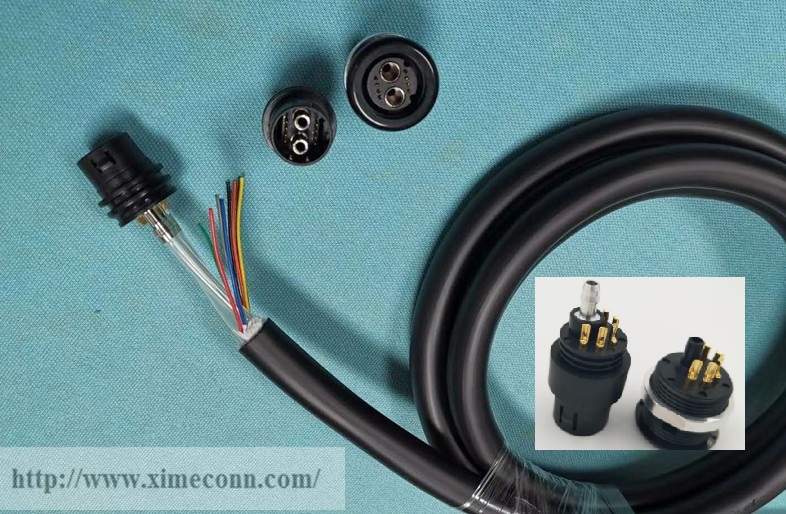
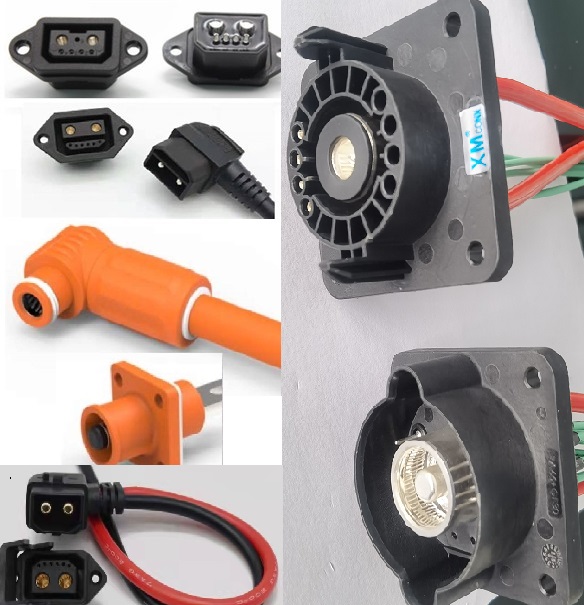
The rating on a connector label describes what the part carries under defined test conditions, not what it carries in every pack. Continuous current establishes where the design starts, peak current adds short bursts of extra thermal duty, and ambient temperature decides how much published margin survives once the connector is mounted inside a real enclosure. Working through those inputs keeps the choice between 100A and 200A grounded in the application rather than a habit of always sizing up.
1. Continuous Current Sets the Baseline Rating Before Peak Demand Is Considered
Start with the steady-state current the pack carries during normal charge and discharge. If a pack is designed for 100A continuous, a 100A rated connector is the natural candidate; a 200A part only makes sense if something else in the design requires extra headroom. Temperature rise at that current is the real constraint. IEC 60512-12-6 describes the standardized test method for plotting temperature rise and current-carrying derating, which is why engineers ask for a derating curve rather than only a headline amp number. Peak current, such as a motor start or fast-charge surge, adds short heat bursts above the continuous baseline. A motor-start surge creates a different thermal load than a repeated fast-charge pulse, and contact mass and contact area determine how much heat builds up.
2. Ambient Temperature Changes How Much Margin a 100A Connector Really Has
Ambient temperature is where a 100A selection goes from comfortable to tight. A connector tested at room temperature has more usable margin than the same part next to a hot inverter or inside a sealed battery box that already runs warm. As surrounding air temperature climbs, allowable continuous current usually has to come down, which is what a derating curve captures. In a pack that sees 60°C internal air, a 100A connector operating near its continuous limit is working with very little remaining margin, while a 200A part in the same location leaves more room before the interface reaches its thermal limit. That difference is the practical reason to choose 200A, and it is worth checking early, because relocating an interface after enclosure tooling is expensive.

 +86-15817275200