A battery pack connector order
runs smoothly when the technical profile, the supplier's manufacturing role,
and commercial terms are all on the table early. Start with continuous and peak
current, pin configuration, ambient temperature, cable interface, quantity, and
application; that turns a vague request into a part a manufacturer can quote
with confidence. Then confirm who actually builds the connector and who signs
off on quality. Finish with MOQ, price basis, sample and production lead times,
warranty, change control, and the document set you expect to receive. Send your
drawings, ratings, and target quantity to the manufacturer, request the DM80
datasheet, and ask for a written quote that answers each term directly.
FAQ
Q:How do
I shortlist a battery pack connector manufacturer for an EV project?
A:Start with technical
fit, then confirm the manufacturing role. Check that the supplier offers the
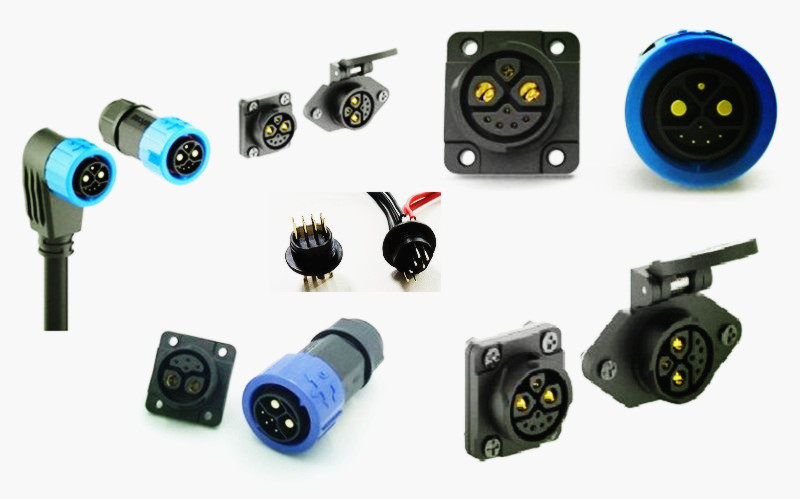
current class and pin layout your pack needs, such as a 2+6 hybrid layout in
100A or 200A. Ask for the housing material and UL94V-0 rating, and request the
datasheet before comparing prices. Then verify who owns the tooling and runs
the assembly line, who your engineering contact will be, and whether the
supplier can also deliver a finished cable assembly. Shortlisting three or four
manufacturers who pass both checks gives you quotes that can be compared on
equal terms.
Q:What
information should I include in an RFQ for high current battery connectors?
A:Send continuous
current, peak current and its duration, the number of power and signal pins,
the signals on each pin, ambient temperature inside the enclosure, cable
conductor size, termination style, panel opening dimensions, and the annual or
per-release quantity. Add the application, such as an EV battery box, a storage
rack, or a PDU interface, plus any packaging or labeling requirement. The more
of this you state, the more precise the reply. Complete input also shortens
follow-up, because the manufacturer does not have to send a second round of
questions before quoting.
Q:Can a
manufacturer support both standard and custom battery pack connector orders?
A:Yes, and it is worth
asking both questions in the same inquiry. Standard orders follow a known part
such as the DM80 with 2+6 pins and 100A or 200A options, which keeps tooling
and documentation simple. Custom work usually covers a different pin
assignment, a specific cable length or angle, overmolded assemblies, or a
housing variation, and it starts from your drawings or samples. Ask how each
path is quoted, what the minimum quantity is for a custom run, and how drawings
are handled under confidentiality, so the standard and custom options can be
evaluated side by side.
Sources / References
Trademark basics
Trade Secrets
Business Guidance
Related Examples
DM80 official product information

 +86-15817275200